What is M-Pesa?
M-PESA is not just a payment app; it is one of Kenya’s most important financial platforms. Launched by Safaricom in 2007, M-PESA allows users to store, send, receive, withdraw, and spend money directly through a mobile phone, even without a traditional bank account. Users can transfer money to other people, pay bills, buy airtime, shop through Lipa na M-PESA, and access other financial services through USSD codes, agents, and the M-PESA app. This made the Safaricom dispute especially significant because the court’s remedy was tied not to a small side product, but to a platform deeply embedded in Kenya’s everyday economy.
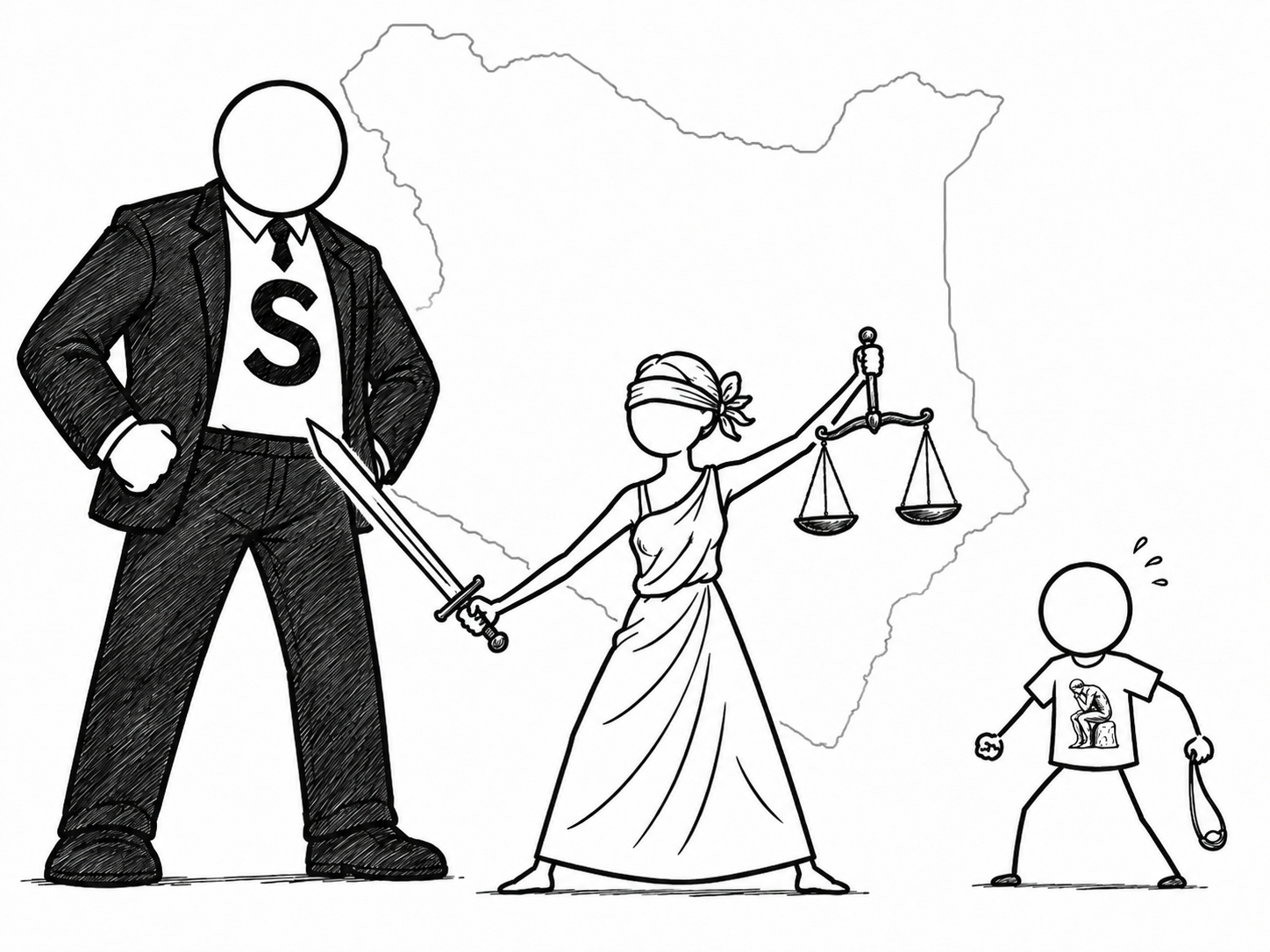
The dispute between Peter Nthei Muoki, Beluga Limited, and Safaricom PLC has become one of Kenya’s most important recent intellectual property cases. At the centre of the case is a mobile-money idea called the M-Teen Mobile Wallet USSD Code, which Muoki said he developed and later pitched to Safaricom.
The product was designed to allow parents to monitor and control children’s or teenagers’ spending through an M-Pesa-linked wallet. In May 2026, the High Court of Kenya found Safaricom liable for copyright infringement and ordered it to pay KSh 1.4 billion, plus an ongoing royalty tied to M-Pesa revenue.
The Who?
The dispute involves Peter Nthei Muoki, a Kenyan innovator, and his company Beluga Limited, who sued Safaricom PLC, Kenya’s largest telecommunications company and operator of M-PESA. Huawei Technologies (Kenya) Company Ltd was also involved in the proceedings as an interested party because Safaricom argued that Huawei had independently worked on a parent-child control solution for M-PESA before Muoki’s pitch.
The key Safaricom executives named in the dispute were Sylvia Mulinge, to whom Muoki allegedly sent the concept in March 2021, and Sitoyo Lopokoiyit, with whom Muoki allegedly had further communication and a physical meeting in June 2021. These alleged interactions mattered because they helped support Muoki’s claim that Safaricom had access to his documented product before launching its own child-account features.
The What?
The case concerned an alleged copyright infringement whether Safaricom copied or unlawfully used Muoki’s documented concept for an M-Pesa child or teen wallet. Muoki’s product, called M-Teen Mobile Wallet, was designed as a sub-wallet for teenagers and young adults, allowing parents to set limits, monitor transactions, and control spending. Safaricom later launched or tested similar parent-child control features under names such as Manage Child Account, Manage Junior Account, and M-Pesa Go, operating through the M-Pesa ecosystem and USSD code *334#.
The court found that Muoki’s detailed documentation was capable of protection as a literary work under copyright law.
In copyright law, general ideas are usually not protected, but the specific expression, structure, documentation, and design of an idea may be protected if they are original and sufficiently detailed.
The Where?
The dispute was heard in Kenya, specifically before the High Court at Nairobi, Milimani Commercial Courts, Commercial and Tax Division. The earlier reported ruling in the case identifies it as Civil Suit E407 of 2022 before Justice Josephine Wayua Wambua Mong’are. The broader business context is Kenya’s mobile-money and fintech sector, where M-Pesa is one of the most influential financial technology platforms in Africa.
The When?
The dispute began after Muoki said he approached Safaricom in March 2021 with his proposal. He later sued in 2022, seeking compensation, royalties, and licensing fees. An earlier procedural ruling was delivered on 4 September 2023, when the court dismissed Safaricom’s attempt to stay proceedings after document-production orders were issued. The major judgment ordering compensation was delivered on 8 May 2026, although Safaricom reportedly obtained a 30-day suspension of the judgment to allow it to challenge the decision at the Court of Appeal.
The Why?
This case was not simply about who first imagined a mobile-money wallet for children. Muoki’s argument was that he had gone further than a general idea: he had created a detailed M-Teen wallet proposal, registered it with the Kenya Copyright Board, and then shared it with Safaricom.
The story becomes more interesting because Muoki allegedly discussed the idea with Sitoyo Lopokoiyit, a senior Safaricom executive linked to M-PESA. According to Muoki, Lopokoiyit raised a major obstacle: in Kenya, minors generally do not have national IDs, meaning the product could face Central Bank of Kenya approval and compliance issues. To Muoki, that conversation showed Safaricom had engaged seriously with the details of his proposal, not just heard a vague idea.
Safaricom denied copying him. It argued that the concept was not original and that Huawei had already been working on a similar parent-child control feature. But the court was not convinced, especially because Safaricom’s explanation relied partly on undocumented verbal instructions. In the end, the court treated Muoki’s written product concept as protectable copyright material and found that Safaricom’s later product was too similar to ignore.
The How?
Importantly, the court did not issue a permanent injunction stopping the product. The judge reasoned that shutting down the service would disrupt many users, including parents and minors who already rely on the functionality. This means the remedy was mainly financial, not a shutdown of the product.
Muoki’s much-discussed US$68/69 million demand should be understood as an alternative compensation claim, not the final award. He and Beluga Ltd asked the court for compensation for Safaricom’s alleged use of the product, including profits, royalties, and licensing fees, or alternatively a lump-sum payment of about US$68 million for the product. The High Court did not adopt that figure. Instead, it calculated damages by reference to Safaricom’s M-PESA revenue, awarding KSh 1.4 billion and an ongoing 0.5% royalty for continued use of the child-account or similar parent-child control functionality.
Why This Case Matters Internationally
This case matters internationally because it shows how intellectual property disputes in African technology markets can involve the same questions seen in the U.S., UK, Canada, and EU: What counts as protectable expression? How should courts treat ideas pitched to large companies? How can startups protect themselves when approaching powerful corporations? The case also shows that African courts may be willing to award significant damages where a creator can prove that a large company used protected work without permission. While copyright does not usually protect a bare idea, it can protect the detailed expression of that idea, such as written product designs, technical documents, user flows, and business proposals.
The Safaricom dispute shows why creators, startups, and investors across different legal systems should take documentation seriously. For businesses, it is a warning that informal meetings, verbal explanations, and undocumented product-development histories can create legal risk. For creators, it is a reminder that registering, recording, and carefully presenting an idea can strengthen their position if a dispute later arises. Internationally, the case adds to the wider debate over how legal systems should balance innovation, corporate growth, and fair recognition for the people who develop commercially valuable ideas.
Impact on Investors, Businesses, and Creators
Going forward, this case may make investors and businesses more cautious when dealing with outside innovators. Large companies may need stronger systems for handling pitches, documenting independent product development, and using non-disclosure agreements or formal licensing agreements before reviewing third-party ideas. For investors, the case highlights IP risk as a serious due-diligence issue, especially in fintech and platform-based businesses.
For creators and founders, the lesson is positive but also practical: document your work, register it where possible, keep records of meetings and emails, and avoid sharing detailed product designs without legal protection. The case could encourage more respect for African innovators, but because Safaricom is appealing, businesses will be watching closely to see whether the High Court’s approach is upheld.
Final Notes:
While it may be too early to call this the largest IP award ever made by a Kenyan court, the Peter Nthei Muoki v Safaricom ruling is certainly one of the most significant publicly reported copyright awards in Kenya’s technology market. The KSh 1.4 billion damages order, combined with an ongoing royalty tied to M-PESA revenue, makes the case stand out not only because of its size but also because it connects copyright protection to one of Kenya’s most commercially important fintech platforms.
To protect intellectual property in Kenya, creators should first identify the type of IP they have. Copyright works are registered through the Kenya Copyright Board, while trademarks, patents, and industrial designs are handled by the Kenya Industrial Property Institute. The basic process involves preparing the work or invention, creating an online account or filing the correct forms, paying the required fees, submitting the application, and keeping copies of all documents and certificates. Most importantly, creators should keep a clear paper trail before sharing ideas with companies, because strong documentation can become crucial if a dispute later arises.
WIPO’s position is that copyright does not protect ideas themselves, only the original expression of those ideas. Kenya follows the same general approach, but the Safaricom case shows how that principle can become powerful in practice: once an innovator reduces an idea into detailed written product documents and registers them, the dispute is no longer just about an idea, but about whether a protected expression of that idea was copied.
Case Specific:
Copy Right Protection in Kenya
Step 1: Identify what type of IP you have
Before registering, decide what you are protecting:
Copyright protects books, music, films, software code, drawings, written proposals, product documents, photos, and creative works. This is handled by the Kenya Copyright Board (KECOBO). https://copyright.go.ke/our-services/copyright-registration
Step 2: For copyright, register through KECOBO
- Go to the Kenya Copyright Board online portal through the National Rights Registry or eCitizen.
- Create an individual or corporate account.
- Upload the work you want to protect.
- Fill in the details of the author/owner.
- Pay the required application fee.
- Submit the application.
- Once approved, download or print your copyright registration certificate.
KECOBO says copyright registration can be done online through the National Rights Registry, where users can upload works, manage registered works, pay fees, and receive certificates.
Reference List
Safaricom, ‘M-PESA’ https://www.safaricom.co.ke/m-pesa accessed 13 May 2026.
World Bank, ‘Mobile Payments Go Viral: M-PESA in Kenya’ https://documents1.worldbank.org/curated/en/638851468048259219/pdf/543380WP0M1PES1BOX0349405B01PUBLIC1.pdf accessed 13 May 2026.
Kiplagat, Sam, ‘Innovator awarded Sh1.4bn over M-Pesa child wallet’ Business Daily (8 May 2026) https://www.businessdailyafrica.com/bd/corporate/technology/innovator-awarded-sh1-4bn-over-m-pesa-child-wallet-5452278 accessed 13 May 2026.
Nzomo, Brian, ‘Safaricom to Pay Innovator KSh1.4bn in Copyright Breach Case’ The Kenyan Wall Street (11 May 2026) https://kenyanwallstreet.com/safaricom-beluga-copyright-breach-case accessed 13 May 2026.
The Analyst, ‘Safaricom ordered to pay KES 1.4 billion to the innovator behind M-PESA Go’s idea, plus a permanent royalty on M-PESA revenue’ Tech-ish (12 May 2026) https://tech-ish.com/2026/05/12/safaricom-1-4-billion-mpesa-go-copyright-ruling/ accessed 13 May 2026.
Muoki & another v Safaricom PLC; Huawei Technologies (Kenya) Company Ltd (Interested Party), Civil Suit E407 of 2022, [2023] KEHC 22039 (KLR), High Court at Nairobi, 4 September 2023 https://sheriahub.com/cases/ke/caselaw/muoki-another-v-safaricom-plc-huawei-technologies-kenya-company-ltd-interested-party-civil-suit-e407-of-2022-2023-kehc-22039-klr-commercial-and-tax-4-september-2023-ruling? accessed 13 May 2026.
World Intellectual Property Organization, ‘How to Obtain Copyright Protection?’ https://www.wipo.int/en/web/copyright/protection accessed 13 May 2026.
World Intellectual Property Organization, ‘Copyright’ https://www.wipo.int/en/web/copyright accessed 13 May 2026.
Kenya Copyright Board, ‘Copyright Registration’ https://copyright.go.ke/our-services/copyright-registration accessed 13 May 2026.
Kenya Industrial Property Institute, ‘Trade Marks’ https://www.kipi.go.ke/trade-marks accessed 13 May 2026.
Kenya Industrial Property Institute, ‘Patents’ https://www.kipi.go.ke/patents accessed 13 May 2026.
Mwango Capital, ‘Safaricom FY26 Results’ Mwango Capital (11 May 2026) https://mwangocapital.substack.com/p/11-05-2026-safaricom-fy26-results accessed 13 May 2026.